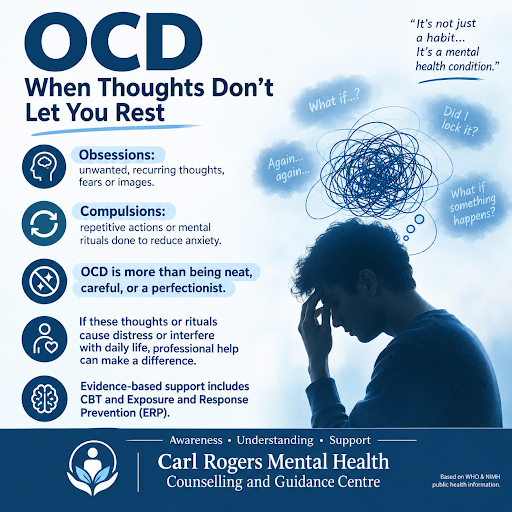
OCD — When Unwanted Thoughts Don’t Let You Rest
Sometimes the mind gets stuck in a cycle:
“What if something goes wrong?” “Did I lock the door?” “What if I made a mistake?”
And even after checking, washing, counting or seeking reassurance, the doubt comes back.
Obsessive-Compulsive Disorder (OCD) is more than being neat, careful, or a perfectionist. It is a mental health condition involving unwanted, recurring thoughts, images or urges (obsessions) and repetitive behaviours or mental rituals (compulsions) that a person feels driven to perform.
Common experiences may include: • Repeated checking or cleaning • Intrusive and distressing thoughts • Excessive doubt or fear • Counting, arranging or repeating things • Mental rituals or repeated reassurance-seeking
When these thoughts or behaviours become distressing, time-consuming, or interfere with everyday life, it may be time to seek professional support.
OCD is treatable. Evidence-based approaches such as Cognitive Behavioural Therapy (CBT) and Exposure and Response Prevention (ERP) can help people manage symptoms and regain control of their daily lives.
You are not your thoughts. And you do not have to face them alone.
Carl Rogers Mental Health Counselling and Guidance Centre Empowering Your Mind, Healing Your Heart A safe, confidential and non-judgmental space for support.
This post is for mental health awareness and does not replace professional diagnosis or medical advice.