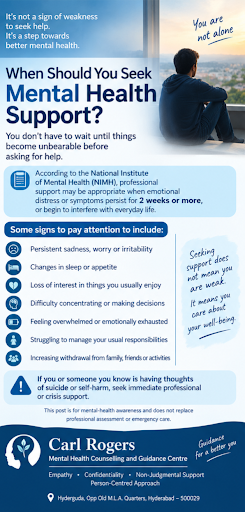
When Should You Seek Mental Health Support?
You don’t have to wait until things become unbearable before asking for help.
According to the National Institute of Mental Health (NIMH), professional support may be appropriate when emotional distress or symptoms persist for 2 weeks or more, or begin to interfere with everyday life.
Some signs to pay attention to include:
- Persistent sadness, worry or irritability
- Changes in sleep or appetite
- Loss of interest in things you usually enjoy
- Difficulty concentrating or making decisions
- Feeling overwhelmed or emotionally exhausted
- Struggling to manage your usual responsibilities
- Increasing withdrawal from family, friends or activities
Seeking support does not mean that you are weak or that something is “wrong” with you. Reaching out can be a constructive step toward understanding what you are experiencing and finding appropriate support.
If you or someone you know is having thoughts of suicide or self-harm, seek immediate professional or crisis support.
Carl Rogers Mental Health Counselling and Guidance Centre Empathy • Confidentiality • Non-Judgmental Support • Person-Centred Approach
This post is for mental-health awareness and does not replace professional assessment or emergency care.